ASVAB Study Guide: Build One From Your Own Materials

MindLumos Team
2026-08-05
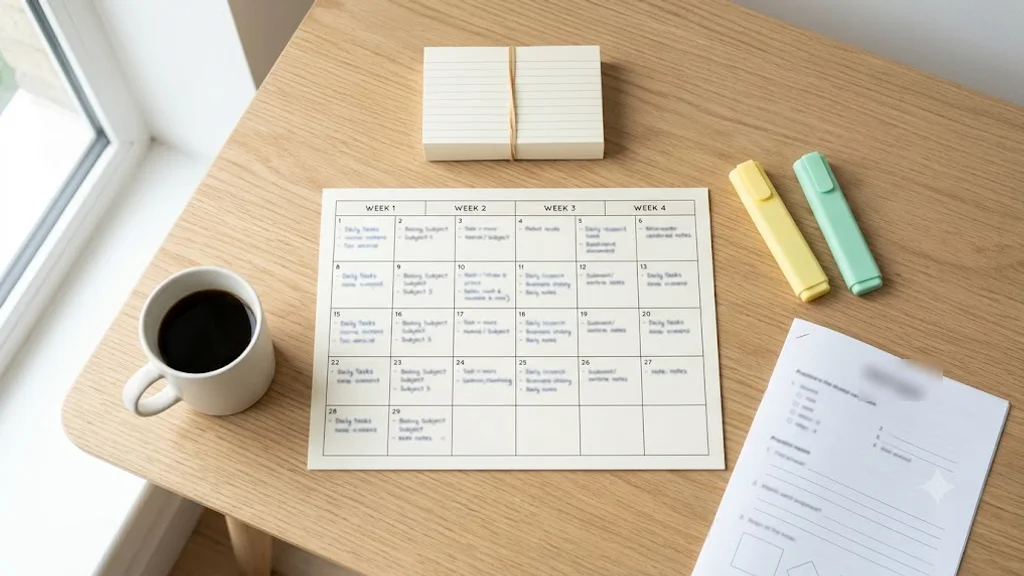
A usable ASVAB study guide covers the four AFQT subtests in priority order, turns each one into recall practice rather than reading, and schedules review across four weeks. Here is the full outline — plus how to build one from the prep book you already own.
Study four subtests, not nine
The ASVAB has nine or ten subtests depending on the version, but only four produce your AFQT score, and the AFQT is what determines whether you can enlist at all. The rest feed line scores that decide which jobs you qualify for.
That means the single highest-leverage decision in ASVAB preparation is made before you study anything: spend your first four weeks on Arithmetic Reasoning, Mathematics Knowledge, Word Knowledge and Paragraph Comprehension, and nothing else.
Arithmetic Reasoning
Word problems. Usually the biggest source of lost marks, and usually because of pace rather than mathematics.

Mathematics Knowledge
Algebra and geometry. The rules are finite, so this is the fastest subtest to improve per hour spent.

Word Knowledge
Vocabulary recall. Responds better to spaced flashcards than to any amount of reading.

Paragraph Comprehension
Short passages. A technique problem: the answer is in the text, not in what you already know.
The four-week outline
Week 1 — Diagnose, then fix arithmetic reasoning
Sit one timed set per AFQT subtest before studying anything. Then spend the rest of the week on Arithmetic Reasoning, because it is the subtest where most candidates lose marks and the one that improves fastest.
- 20 min AR word problems
- 10 min vocabulary review
- Rewrite every wrong answer as a fresh question
Week 2 — Mathematics knowledge
Algebra and geometry rules are finite, which makes MK the highest-return subtest per hour. Work through one topic at a time — linear equations, exponents, area and volume, factoring — rather than mixed sets.
- 25 min one MK topic
- 10 min AR to keep it warm
- 5 min reviewing yesterday's errors
Week 3 — Verbal: word knowledge and paragraph comprehension
Word Knowledge is pure recall, so spaced flashcards beat reading lists. Paragraph Comprehension is a technique problem: the answer is always in the passage, and the commonest error is answering from general knowledge.
- 15 min WK flashcards
- 20 min PC passages, answering only from the text
- 10 min mixed maths
Week 4 — Full batteries under time
Stop learning new material. Sit complete sets in order so the length stops being a surprise, and rehearse the pacing decision: when to commit to an answer and move on.
- One full timed AFQT set every other day
- Full review of every error on rest days
- No new topics

Already own a prep book as a PDF? You can skip the copying entirely — upload it and generate the structured guide, then spend the four weeks on the part that actually raises a score, which is being tested.
What is the best way to study for the ASVAB?
Reading a study guide feels like studying and is the weakest thing you can do with the time. What raises an AFQT score is retrieval: attempting a question, getting it wrong, and closing that specific gap.
- Test before you read. A cold attempt tells you what to study; reading first only tells you what feels familiar.
- Keep an error log. Every wrong answer becomes a card. This log, not the guide, is your real study material by week two.
- Space the review. Revisit at two days, one week, two weeks. Cramming a vocabulary list the night before does almost nothing for Word Knowledge.
- Practise to the clock from week three. Untimed practice inflates your score and hides the pacing problem that costs most candidates marks.
- Do not add the other subtests early. They matter for job selection, not for eligibility. Add them once the four AFQT subtests are stable.
ASVAB study guides compared
No single guide does everything, and the differences matter more than the price.
| Guide | What it gives you | Best for |
|---|---|---|
| Official ASVAB site | Current test format, sample items and how scoring works — free and authoritative. | Best for confirming the format before you plan |
| ASVAB for Dummies | Plain-English coverage of every subtest with practice batteries. | Best for a first pass when you do not know the test |
| Mometrix ASVAB guide | Dense subject review with detailed answer explanations. | Best for closing specific knowledge gaps |
| Kaplan ASVAB | Full-length practice tests with pacing guidance. | Best for timed rehearsal |
| MindLumos | Turns your own prep PDF, photographed pages, notes or lecture audio into a structured guide plus quizzes and flashcards. It does not supply official ASVAB questions or content of its own. | Best for drilling the book you already bought |

MindLumos reads PDFs, images including legible handwriting, audio files and article links. It does not support YouTube links or video uploads. A study guide costs two to three credits and a quiz one to two; a free account includes four credits in total.
A note on scores
The AFQT is reported as a percentile from 1 to 99, so a 50 means you scored better than half the reference group — not that you answered half the questions correctly. Practice scores, especially untimed ones, run higher than real ones.

Minimum qualifying scores vary by branch, by education level and by programme, and they change. We do not publish them here because an out-of-date figure could cost someone an application — confirm current requirements with a recruiter or the official ASVAB site.
Frequently asked questions
What is the best way to study for the ASVAB?
Study only the four AFQT subtests first, in the order Arithmetic Reasoning, Mathematics Knowledge, Word Knowledge, Paragraph Comprehension. Test yourself before reviewing, convert every wrong answer into a new practice question, and add timing pressure in the final two weeks.
How long should I study for the ASVAB?
Four weeks of consistent daily work is enough for most candidates to move their AFQT meaningfully. Short daily sessions outperform long weekend sessions because the score depends on recall speed as much as on knowledge.
What should an ASVAB study guide contain?
The four AFQT subtests in priority order, the formulas and vocabulary you personally keep missing, a weekly schedule, and a growing list of your own wrong answers. A guide that is only content and no self-testing does very little.
Is ASVAB for Dummies a good study guide?
It is a reasonable overview of the test format and covers all nine subtests. Like every published guide its weakness is that it cannot adapt to your errors, so pair it with self-testing on the specific questions you get wrong.
Can I build an ASVAB study guide from my own prep book?
Yes. If the book is a PDF, or you photograph its pages, MindLumos can turn it into a structured study guide plus quizzes and flashcards. It reads PDFs, images including legible handwriting, audio files and article links, but not YouTube links or video uploads.
Do all nine ASVAB subtests matter?
For enlistment eligibility, only the four AFQT subtests matter. The remaining subtests feed line scores that determine which military jobs you qualify for, so they matter for job selection rather than for getting in.
Continue Reading
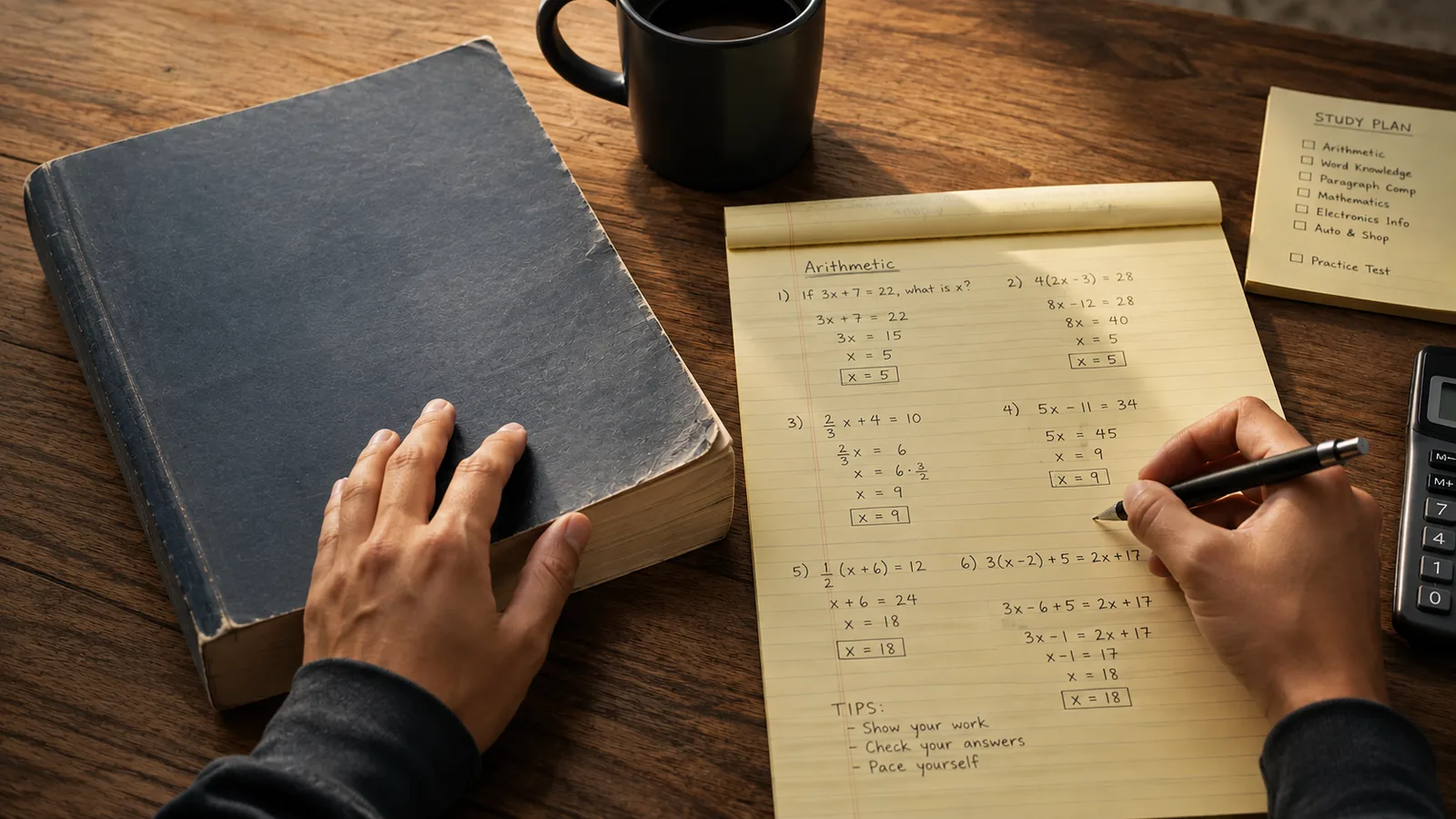
ASVAB Practice Test: Free Questions by Subtest (2026)
Free ASVAB practice questions with worked answers for all four AFQT subtests.
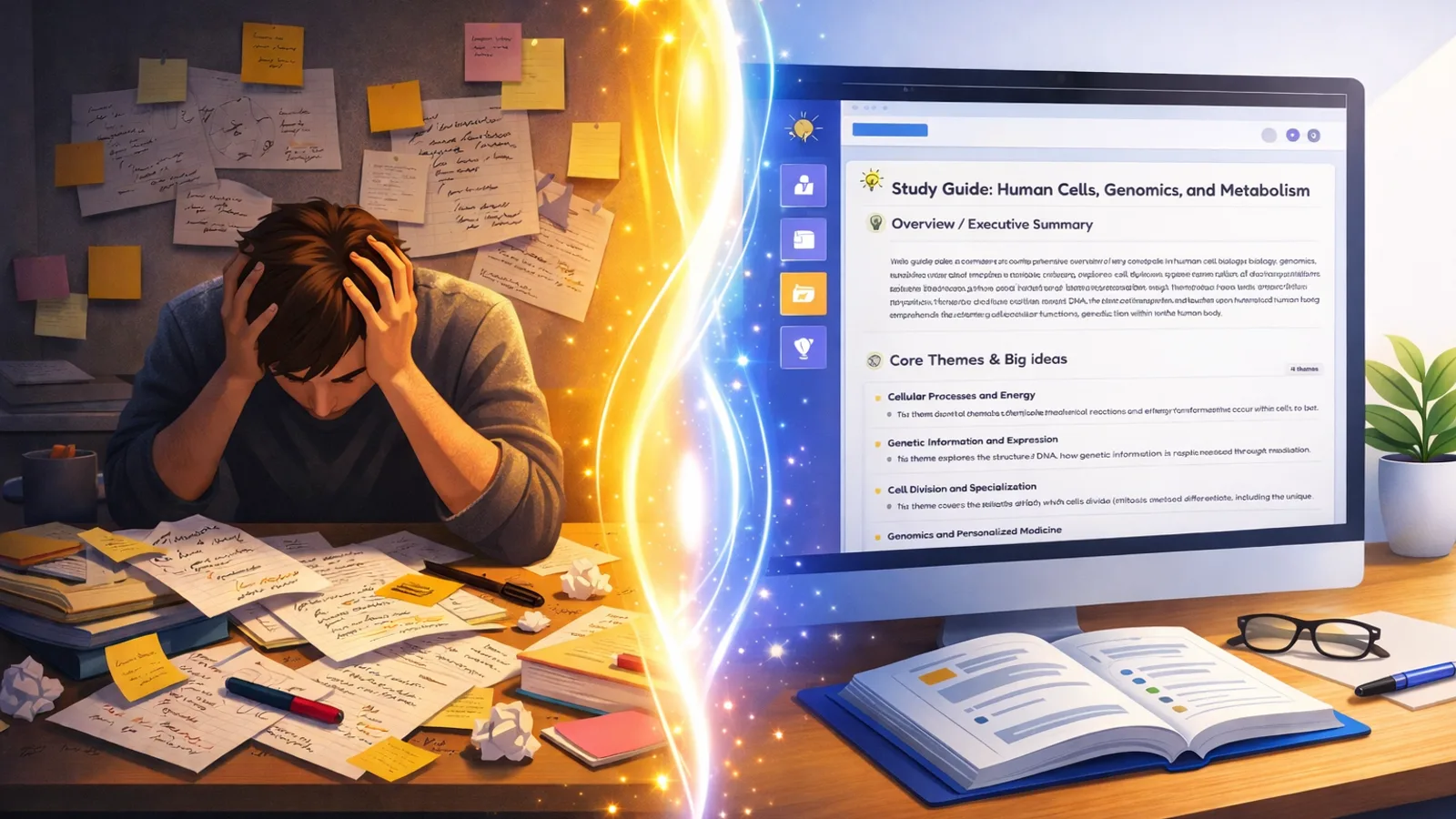
AI Study Guide Maker: Generate Study Guides from Notes Automatically (2026)
The best AI study guide makers generate organized study guides from your notes and PDFs in seconds. Compare top tools and create guides with AI.